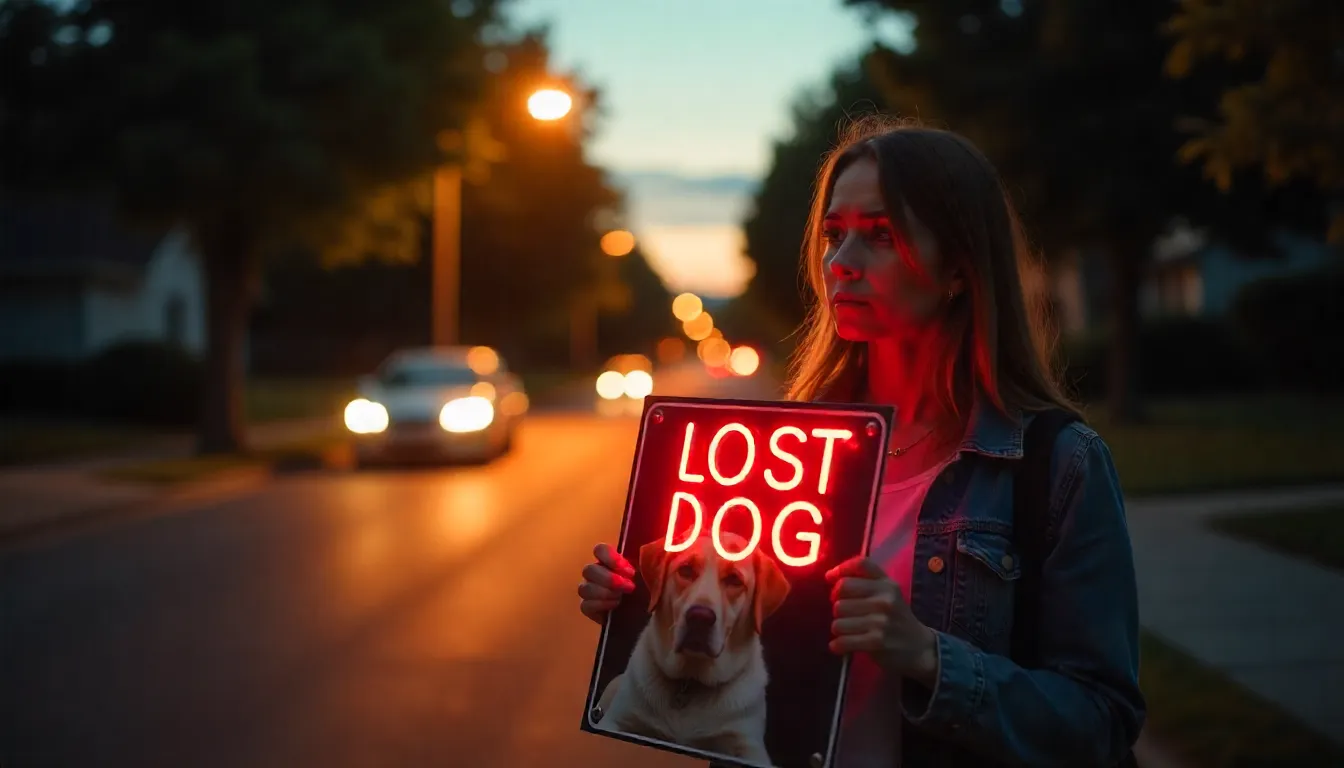

How to Find Lost Dog: Complete Recovery Guide That Actually Works
Every year, millions of beloved dogs go missing, leaving families devastated and desperate for answers. But here’s what most pet owners don’t know: there’s a proven system that dramatically increases your chances of bringing your furry family member home safely.
The moment your dog goes missing, panic sets in. Your mind races with worst-case scenarios while precious time slips away. The harsh reality is that 10 million pets are reported lost yearly, but the encouraging news is that 93% of dogs had higher recovery rates than cats (75%) when the right methods are employed systematically.
This comprehensive guide reveals the exact strategies used by professional pet recovery specialists who’ve successfully reunited thousands of dogs with their families. You’ll discover why common approaches like calling your dog’s name actually reduce your chances of success, and learn the counterintuitive techniques that actually work.
Why Traditional Lost Dog Methods Fail (And What Works Instead)
Most people immediately make critical mistakes when their dog goes missing. They panic, call the dog’s name repeatedly, and chase after sightings. These natural reactions, while understandable, often push frightened dogs further away and reduce recovery odds dramatically.
Microchipped pets are three times more likely to be reunited with their owners, yet even with identification, many dogs remain lost because their families don’t know how to search effectively. The difference between successful and unsuccessful searches isn’t luck—it’s methodology.
The 5 Critical Mistakes That Push Your Dog Further Away
Never Call Your Dog’s Name This sounds counterintuitive, but calling your dog’s name when he’s already stressed and disoriented often triggers his flight response. In most missing dog cases, the animal has already had frightening encounters with well-meaning strangers who tried to catch him. Your stressed voice calling his name may increase his anxiety rather than comfort him.
Don’t Chase Your Dog The moment you see your lost dog, every instinct tells you to run toward him. Resist this urge completely. Even the smallest, most elderly dog can outrun most humans. Chasing transforms you from a safe person into a perceived threat, making future recovery attempts exponentially more difficult.
Avoid Waiting for Him to Return While approximately 25% of lost dogs do return home on their own, waiting is not a strategy. Dogs had higher recovery rates (93%) than cats (75%) when active search methods were employed within the first 48 hours.
Don’t Trust Every “Expert” Opinion Well-meaning neighbors will tell you your dog was “probably killed by coyotes” or “definitely picked up by someone.” These statements are rarely based on facts. 71% of lost dogs were recovered compared to 53% of lost cats according to Ohio State research, proving most negative predictions wrong.
Never Give Up Too Early The biggest obstacle to successful dog recovery isn’t predators or distance—it’s owners who stop searching. Dogs have been recovered after months or even years, but only when their families maintained consistent search efforts.

The Proven 17-Step Lost Dog Recovery System
Phase 1: Immediate Response (First 24 Hours)
Step 1: Organize Your Search Team Enlist at least 3-5 people immediately. Create specific roles: one person handles social media, another coordinates shelter visits, someone else manages poster distribution. Designate a search coordinator who maintains all records and communication.
Keep detailed written records of everything:
- Your dog’s vital statistics (weight, color, medical conditions, temperament)
- All volunteer contact information for mass text alerts
- Every tip with caller contact details and specific location information
- Detailed sighting logs with dates, times, and directions of travel
- Maps marking all confirmed and possible sightings
Step 2: Secure Your Safety Never search alone, especially when following up on tips from unknown callers. Don’t carry large amounts of reward money. Be cautious of people calling from blocked numbers. Always get permission before searching private property.
Step 3: Create Professional-Quality Flyers Your flyers are your most important marketing tool. Include:
- One clear, simple photo showing your dog’s actual appearance
- Single contact phone number in large font (100+ point size)
- “DO NOT CHASE” in bold letters
- Date your dog went missing
- Last seen location
- Basic description in few words (“OLD BLACK LAB” or “BROWN PITBULL MIX”)
Distribute to mail carriers, delivery drivers, veterinarians, pet stores, shelters, coffee shops, and every neighbor within a 5-block radius.
Phase 2: Maximum Visibility Campaign (Days 2-7)
Step 4: Deploy Large Neon Poster System This technique has the highest success rate after dogs returning on their own. Create 22″x28″ neon posters with:
- 6-inch high black letters reading “REWARD” at top, “LOST DOG” at bottom
- Two sheet protectors taped side-by-side in middle
- One protector with clear dog photo, other with large-font contact info
- Mount on stakes or sandwich boards with property owner permission
Place at major intersections with stop signs or traffic lights where your dog was last seen. Check and maintain daily—weathered signs signal you’ve given up.
Step 5: Mark Your Vehicle Use waterproof neon markers to write on your rear window: LOST BLACK LAB 15TH & 159TH 206-552-0304
This transforms your search vehicle into a mobile advertisement, reaching hundreds of potential witnesses as you search.

Step 6: Systematic Neighborhood Canvas Go door-to-door within expanding circles from the last known location. Don’t just leave flyers—speak with residents personally. Ask specific questions:
- Have you seen any dogs in your yard recently?
- Do you have security cameras we could review?
- What time do you typically walk outside?
- Can we leave our contact information?
Many critical tips come from neighbors who wouldn’t think to call the number on a flyer but will share information when asked directly.
Phase 3: Advanced Search Techniques (Week 2+)
Step 7: Master Modern Technology Integration
GPS trackers provide real-time location tracking, which is essential if your dog ever escapes, but for already-lost dogs, leverage these digital tools:
- Social Media Saturation: Create dedicated Facebook pages, post in neighborhood groups, use Instagram stories with location tags, and share on Twitter with local hashtags.
- Professional Alert Services: Services like FindToto.com can call thousands of households in your target area with your dog’s information for $85-$875 depending on reach.
- Security Camera Networks: Contact businesses and homes with visible cameras to review footage from the time your dog went missing.
- Wildlife Cameras: Deploy motion-activated cameras at feeding stations in areas where your dog has been spotted to confirm his presence and behavior patterns.
GPS tracking devices play a critical role in modern recovery efforts; you can explore top options in detail in the Pet Crunch article on dog GPS trackers.
Step 8: Strategic Shelter and Rescue Monitoring Visit every shelter in your region every other day—don’t rely on phone calls or online photos. Many areas have multiple agencies:

- City animal control
- County shelters
- Private rescue organizations
- SPCA or Humane Society branches
Check PetFinder.com and all local rescue Facebook pages daily. Some rescues incorrectly label found dogs as “abandoned” and attempt rehoming without proper lost pet protocols.
Step 9: Implement Calming Signals When Sighted If you locate your dog, use these scientifically-proven techniques:
- Stop moving immediately and look away
- Lie flat on your back (dogs almost always approach humans in this position)
- Run away from your dog (triggers chase instinct)
- Never make direct eye contact or sudden movements
- Use food rewards dropped “accidentally” while stepping away
Step 10: Deploy Humane Trapping (When Necessary) If your dog won’t approach using calming signals, professional-grade humane traps may be required. Use TruCatch traps sized appropriately for your dog’s weight. This technique requires expertise—one mistake can make your dog trap-shy permanently.
Phase 4: Persistent Long-Term Recovery (Weeks 3+)
Step 11: Intersection Sign Waving Stand at major intersections with your large neon signs during high-traffic periods. This technique consistently generates fresh sightings and tips. Position team members on all four corners if possible, or mount signs on other corners while you wave actively.
Step 12: Professional Search Dog Services Scent-trailing dogs can follow your dog’s path when deployed within 48 hours of the last sighting. These specialized canines (different from human search dogs) cost approximately $350+ but can track scent trails invisible to humans. Success rates depend heavily on weather conditions and trail freshness.
Step 13: Advanced Behavioral Analysis Profile your dog’s likely behavior patterns:
- Food-motivated dogs: Set feeding stations with cameras
- Water-seeking dogs: Monitor streams, ponds, drainage areas
- Social dogs: Use friendly “lure dogs” in visible areas
- Fearful dogs: Search during quiet dawn/dusk hours
- Adventure-seeking dogs: Check hiking trails and parks
The Science Behind Lost Dog Behavior (What Most Owners Don’t Know)
Understanding how dogs think when lost completely changes your search strategy. Frightened dogs enter “flight mode” where their normal training and socialization temporarily disappear. They often don’t recognize their own names when called and may run from their beloved owners.
Most lost dogs create a small territory within 1-2 miles of where they went missing. They typically move during dawn and dusk, hide during busy daytime hours, and are drawn to water sources and food scents. Weather significantly affects their movement patterns—rain and cold cause them to seek shelter, while mild weather encourages exploration.
If your dog was well-socialized and trained from puppyhood, it may respond more quickly to calming and recall techniques — see How to Raise the Perfect Dog for a deeper dive into building confident, well-trained behavior.
Modern Technology: Your Secret Recovery Weapon
Today’s search efforts benefit from technological tools unavailable just a few years ago:
GPS Tracking Prevention The Whistle GO Explore tracks your dog’s location and provides activity and health data in a compact package that can easily attach to the collar of dogs weighing 25 pounds and up. What’s unique about it is that it features a lost dog mode that will update your pet’s location every 15 seconds.
Social Media Amplification Facebook’s algorithm favors posts with high engagement. Lost pet posts naturally generate shares and comments, increasing visibility exponentially. Create dedicated hashtags combining your dog’s name with your location (#FindMaxSeattle).
Automated Communication Systems Mass text messaging services allow instant coordination of search teams. When someone reports a sighting, you can immediately alert dozens of volunteers with specific search assignments.
Timeline Expectations: When Hope Meets Reality
First 24 Hours: Highest success rate period. Many reunited within 24 hours according to recent statistics. Focus on immediate area canvassing and flyer distribution.
Days 2-7: Extended local search phase. Most dogs are found within 1-2 miles of their starting point during this period. Deploy large poster systems and organize volunteer search teams.
Weeks 2-4: Regional expansion phase. Begin checking shelters in adjacent cities, expand social media reach, and consider professional search services.
Month 2+: Persistence pays off. Many dogs are recovered after months through consistent poster maintenance and shelter monitoring. Never assume your dog is “too far gone” to find.
Having a solid pet survival preparedness plan ahead of time can dramatically improve your response speed — see the Pet Crunch pet survival guide for tips on emergency readiness, safe housing, and disaster planning.
Success Story: The 127-Day Recovery
Sarah’s Golden Retriever, Duke, escaped during a thunderstorm in suburban Dallas. Following this systematic approach:

- Days 1-3: Organized search teams, distributed 500 flyers
- Week 1: Deployed 15 large neon posters at key intersections
- Week 2: Generated 12 confirmed sightings through poster visibility
- Day 127: Duke approached a feeding station monitored by wildlife camera
Duke was successfully trapped and returned home healthy. The key factors: consistent poster maintenance, systematic shelter checks, and refusing to give up despite negative predictions from neighbors.
Red Flags: Avoiding Search Sabotage
Predator Panic: 75% of lost cats are found within a third of a mile from where they escaped, and dogs have even higher survival rates. Don’t let “coyote killed your dog” stories derail your search efforts.
Psychic Scams: Pet psychics consistently provide vague, unhelpful information. Save your money for proven search methods.
Unqualified “Pet Detectives”: Anyone can claim expertise in pet recovery. Verify credentials and success rates before paying for services.
Social Media Misinformation: Well-meaning but incorrect advice spreads rapidly online. Stick to proven techniques from verified sources.
Your Dog’s Recovery Probability Calculator
Several factors affect your success odds:
Increases Chances:
- Microchipped and tagged dog
- Starting search within 24 hours
- Systematic approach following all steps
- Active social media campaign
- Consistent long-term effort
Decreases Chances:
- Waiting for the dog to return
- Inconsistent search efforts
- Giving up after negative comments
- Focusing only on one search method
- Not maintaining posters and flyers
The Investment: Time, Money, and Emotional Energy
Expect to invest 8-12 hours daily in active search efforts. Financial costs typically range from $200-$1,000 for a comprehensive search including:
- Poster materials: $50-$100
- Flyer printing: $30-$75
- Professional search services: $350-$500
- Communication/alert services: $85-$200
- Equipment rental (traps, cameras): $100-$300
This investment is minimal compared to your dog’s value to your family and significantly less than acquiring and training a replacement pet.
When to Scale Back (But Never Give Up)
After 30 days of intensive searching, you may need to reduce daily time investment while maintaining key activities:
- Keep 3-5 posters refreshed at prime locations
- Check shelters twice weekly instead of every other day
- Monitor social media and online listings daily
- Maintain one feeding station with camera monitoring
- Respond immediately to any new tips or sightings
Building Your Support Network
Successful recoveries require community support. Build relationships with:
- Local veterinary clinics and staff
- Animal control officers and shelter volunteers
- Neighborhood watch groups and community associations
- Dog walking groups and pet service providers
- Social media pet recovery groups specific to your area
The Emotional Journey: Protecting Your Mental Health
Searching for a lost dog tests your emotional limits. Expect cycles of hope and despair as leads develop and disappear. Maintain perspective by:
- Taking scheduled breaks from searching
- Accepting help from friends and family
- Focusing on actionable steps rather than “what if” scenarios
- Celebrating small victories like new sightings or fresh leads
- Preparing mentally for a long-term search commitment
Advanced Recovery Techniques for Specific Scenarios
The Invisible Dog: Some dogs become completely nocturnal and hide during daylight hours. Deploy multiple wildlife cameras, search with thermal imaging equipment, and focus efforts during 4-6 AM timeframe.
The Traveler: Dogs that cover large distances require expanded search zones. Plot sightings on maps to identify travel patterns and predict future locations.
The Injured Dog: Hurt dogs often seek shelter in small spaces like under decks, in drainage pipes, or dense vegetation. Search thoroughly in areas that might provide protection.
Legal Considerations and Documentation
Keep detailed records of all search activities, expenses, and communications. This documentation proves due diligence if ownership disputes arise and may be required for insurance claims or legal proceedings.
Understand your local laws regarding:
- Posting flyers on public property
- Accessing private property during searches
- Humane trap placement and operation
- Liability issues when organizing volunteer search teams
Measuring Success Beyond Just “Found/Not Found”
Track these success indicators during your search:
- Number of people reached through flyers and posters
- Confirmed sightings and directional information gathered
- Community members actively watching for your dog
- Search area systematically covered
- Relationships built with shelters and rescue organizations
These metrics indicate search momentum even when your dog hasn’t been physically recovered yet.
Your Next Steps: Implementing the System
Start immediately with these priority actions:
- Hour 1: Create search team, begin neighborhood canvas
- Hours 2-4: Design and print flyers, distribute to immediate neighbors
- Day 1: Visit all local shelters in person, file reports
- Day 2: Create large neon posters, mark your vehicle
- Days 3-7: Deploy poster system, organize sign-waving sessions
- Week 2+: Consider professional services, maintain long-term systems
Your Dog Is Waiting for You to Find Him
A remarkable 93% recovery rate for lost dogs proves that most missing dogs can be found when the right methods are applied consistently. Your dog isn’t “gone forever” or “living happily with someone else”—he’s most likely within a few miles of home, waiting for you to find him using these proven techniques.
The difference between families who recover their dogs and those who don’t isn’t luck or circumstances—it’s knowledge and persistence. You now have the complete system used by professional pet recovery specialists who’ve reunited thousands of dogs with their families.
Your dog is counting on you to not give up, to search systematically, and to keep believing in his return. Every minute you delay reduces your success odds, so start implementing these steps immediately.
Remember: most lost dogs are found not by chance, but by families who refused to quit and knew exactly what steps to take. Your dog needs you to be one of those families.