
Breaking Barriers: How Brazil’s Projeto Voar Transforms Rescued Parrots into Wild Survivors in 2025
The humid rainforests of Minas Gerais echo with a sound that conservation experts once thought might disappear forever—the triumphant calls of formerly captive Amazon parrots now soaring free through their native canopy. Brazil’s groundbreaking Projeto Voar (To Fly Project) has shattered conventional wisdom about parrot rehabilitation, proving that even birds held in captivity for years can successfully return to the wild with specialized training protocols.
Since 2022, the To Fly Project has rehabilitated, released, and monitored five groups of parrots, including two groups of turquoise-fronted Amazons (53 birds) and three groups of vinaceous-breasted (50 birds) Amazon parrots. This remarkable achievement represents a paradigm shift in wildlife conservation, offering hope for the thousands of parrots rescued from Brazil’s illegal pet trade annually.
The Revolutionary Science Behind Projeto Voar’s Success
Challenging Traditional Conservation Beliefs
For decades, conservationists believed that parrots raised in captivity couldn’t develop the essential survival skills needed for wild living. The Waita Research and Conservation Institute, established at Belo Horizonte Wildlife Triage Center in 2010, dared to challenge this assumption with innovative rehabilitation techniques that have revolutionized parrot conservation in Brazil.
The organization developed the “Projeto Voar (To Fly Project)” based on the hypothesis that, with very specialized rehabilitation training, necessary survival skills can be developed in wild birds subjected to captive living. This groundbreaking approach has transformed how we understand avian adaptability and learning capacity.
The Comprehensive Rehabilitation Protocol
The success of Brazil’s parrot rehabilitation program lies in its meticulous, science-based approach. The protocol encompasses four critical phases:
Selection and Screening Phase Every parrot candidate undergoes rigorous health assessments and behavioral evaluations to determine their rehabilitation potential. Only birds demonstrating adequate physical condition and learning capacity advance to the training phase.
Intensive Survival Training Each bird candidate must successfully learn flight and food training. The program divides participants into control groups—one receiving predation avoidance training while the other undergoes human aversion conditioning. This comparative approach allows researchers to measure the effectiveness of different training methodologies.
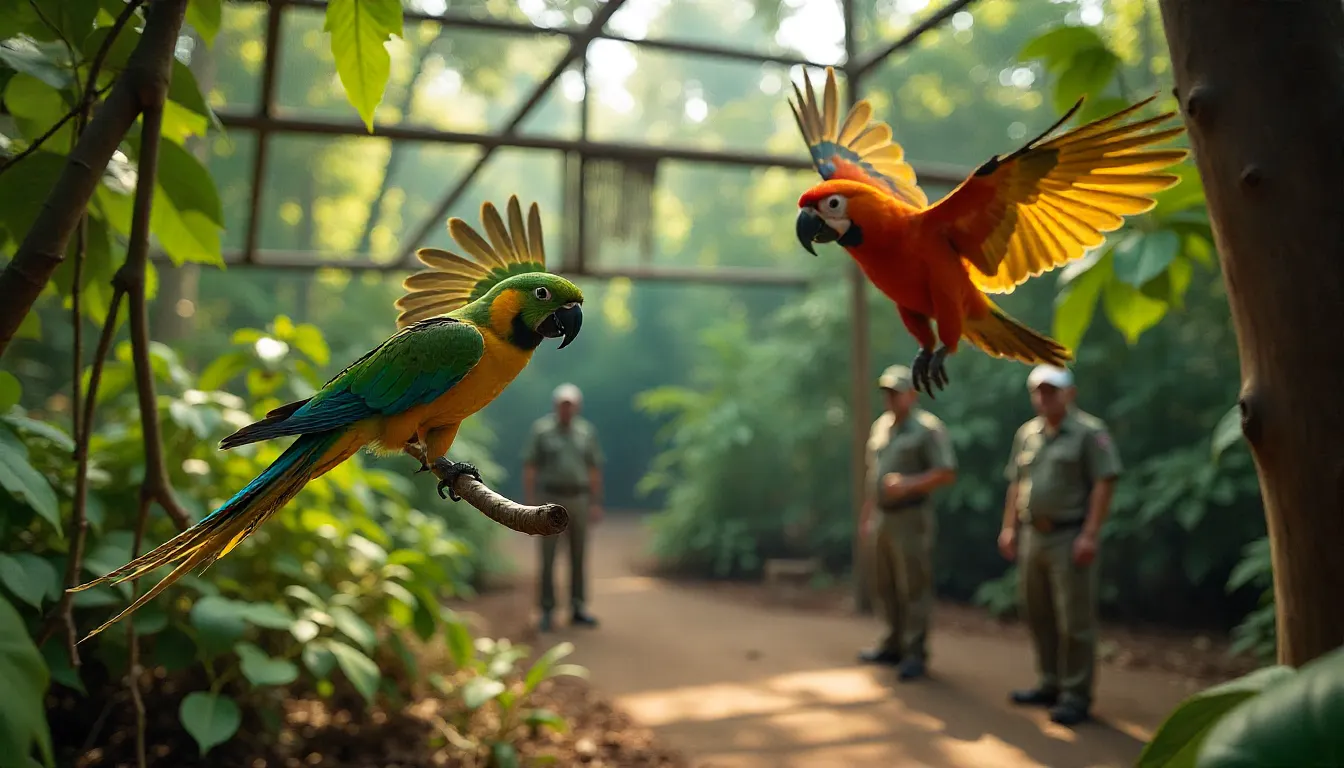
Soft Release Implementation Unlike traditional hard releases, Projeto Voar employs a gradual transition strategy. There is a soft release, which means the aviary remains open. They are free to choose when to leave, and even return if they wish. This approach reduces stress and allows birds to adapt at their own pace.
Comprehensive Monitoring System Once released, the Amazons are monitored daily during the first month. After the second month, data is collected every seven days, but the team remains in the field to assist as needed. Each bird is retrofitted with transmitter collars prior to release to assist the monitoring team.
Remarkable Success Stories from 2025 Releases
Turquoise-Fronted Amazon Breakthrough
The turquoise-fronted Amazon (Amazona aestiva) rehabilitation represents one of Brazil’s most significant conservation victories. In 2012, in partnership with governmental agencies, Waita decided to rehabilitate, release, and monitor 31 turquoise-fronted Amazon parrots rescued from wildlife trafficking. After 13 months of monitoring these released parrots, over 50% were successful in returning to and surviving in the wild.
This initial success laid the foundation for expanded operations. The 2025 cohorts have demonstrated even higher survival rates, thanks to refined training protocols and improved monitoring techniques.

Vinaceous-Breasted Amazon Recovery
The endangered vinaceous-breasted Amazon (Amazona vinacea) rehabilitation program showcases the project’s adaptability to different species’ needs. These stunning parrots, native to Brazil’s Atlantic Forest, face severe population pressures from habitat loss and illegal capture.
The 2025 releases have shown promising results, with several pairs displaying natural mating behaviors and territorial establishment. Some of the birds had paired up during the earlier phases, and several pairs even laid eggs. However, no chicks hatched, but this indicates that it’s still possible for birds once held captive to raise offspring in the wild.
Overcoming Critical Challenges in Parrot Rehabilitation
Predation Management Strategies
Predation remains the most significant threat to released parrots, particularly those lacking natural survival instincts. Over the course of the project so far, it is estimated that about 20% of the relocated birds have been predated. Anti-predation training continues to evolve, with the addition of dogs, cats, and humans as perceived predators.
The project continuously refines its anti-predation protocols, incorporating new stimulus types and training methodologies to better prepare birds for wild encounters with natural predators.
Human Interference and Recapture Risks
Beyond natural predators, human interference poses substantial challenges. It is thought that some of the birds that disappeared during the project were possibly recaptured by humans. This ongoing threat highlights the importance of community education and law enforcement cooperation.
Social Integration Complexities
Released parrots must navigate complex social dynamics with both their own species and other bird communities. During the monitoring phase, the team noticed that there were both positive and agonistic social behaviors, sometimes with conspecific species, and at other times with other species like the scaly-headed Pionus or white-eyed conures.

Brazil’s Broader Parrot Conservation Landscape in 2025
National Conservation Context
Brazil is home to over 80 endemic and non-endemic parrot species. Many of them are near-threatened or threatened in the wild. This extraordinary diversity comes with significant conservation responsibilities, as Brazil hosts more threatened parrot species than any other nation.
Success Stories Beyond Projeto Voar
Brazil’s conservation efforts extend beyond the To Fly Project. Thanks to a project to install artificial nests on an island on the Paraná coast, the number of parrots almost doubled in 20 years, taking the bird from “endangered” to “near threatened” status, the only case of its kind in Brazil. This red-tailed Amazon recovery demonstrates the effectiveness of targeted conservation interventions.
Innovative Approaches Across Species
In an unprecedented project in the municipality of São Simão, blue-and-yellow macaws born in captivity were trained in free-flight techniques before being introduced into the wild. These diverse approaches highlight Brazil’s commitment to developing species-specific conservation strategies.
Community Engagement and Legal Frameworks
Local Community Partnership
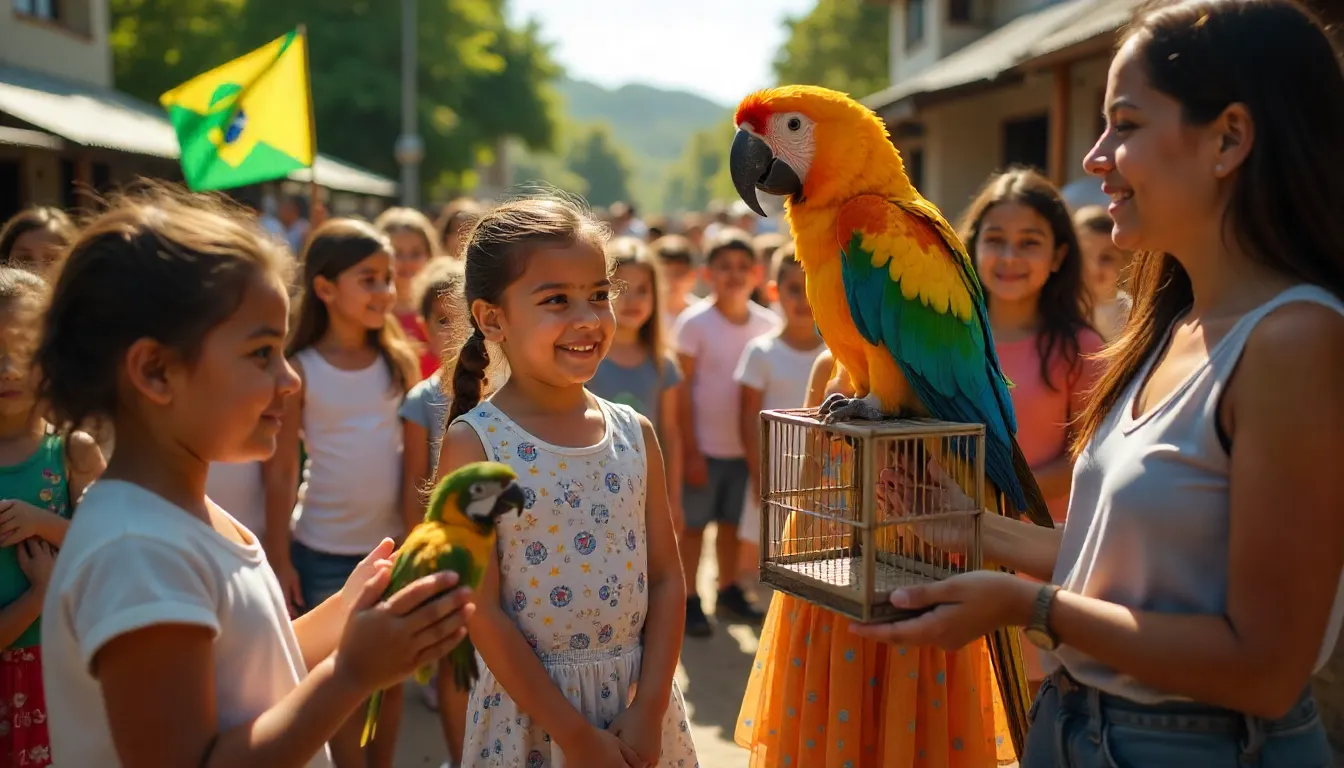
The success of parrot rehabilitation programs depends heavily on community support and education. Valuable new partnerships with local authorities are being developed to educate communities about the need to preserve the birds in their wild habitats as well as return any parrots that may be found in homes.
Legislative Support and Recognition
Community engagement has achieved remarkable milestones. One locality, Dom Joaquim, even passed a law to establish October 22nd as Vinaceous-Breasted Amazon Parrot Day! This legislative recognition demonstrates growing awareness and support for parrot conservation initiatives.
Future Prospects and Expansion Plans
Scaling Successful Methodologies
The proven success of Projeto Voar’s rehabilitation protocols opens possibilities for scaling operations across Brazil’s diverse ecosystems. Plans for 2025 and beyond include expanding to additional parrot species and establishing satellite rehabilitation centers in different biogeographic regions.
Research and Development Priorities
Ongoing research focuses on improving survival rates, reducing predation losses, and achieving successful breeding among released populations. Advanced tracking technologies and behavioral analysis tools continue enhancing monitoring capabilities.
International Collaboration Opportunities
Brazil’s parrot rehabilitation successes attract international attention and potential collaboration opportunities. Sharing methodologies and best practices with other parrot-range countries could amplify global conservation impacts.
Measuring Success: Key Performance Indicators
Survival Rate Metrics
The project’s primary success metric remains long-term survival rates of released birds. Current data shows encouraging trends, with survival rates exceeding initial projections for most released cohorts.
Behavioral Adaptation Assessment
Successful wild behavior adoption serves as another crucial indicator. Released parrots demonstrating natural foraging, social interaction, and territorial behaviors indicate successful rehabilitation outcomes.
Population Integration Success
The ultimate goal involves seamless integration into existing wild populations, contributing to genetic diversity and population stability. Early indicators suggest positive progress toward this objective.
Frequently Asked Questions
A Model for Global Parrot Conservation
Brazil’s Projeto Voar represents more than a successful rehabilitation program—it embodies a transformative approach to wildlife conservation that challenges traditional assumptions while delivering measurable results. The project’s success with turquoise-fronted and vinaceous-breasted Amazons proves that with dedication, scientific rigor, and community support, even the most challenging conservation goals become achievable.
As 2025 progresses, the continued success of these remarkable rehabilitation efforts offers hope not just for Brazil’s imperiled parrot species, but for similar conservation challenges worldwide. The lessons learned from tracking these released birds will undoubtedly inform future conservation strategies, ensuring that the skies above Brazil’s forests continue echoing with the calls of wild, free-flying parrots for generations to come.
The Projeto Voar birds of 2025 serve as living ambassadors for the power of innovative conservation science, community partnership, and unwavering commitment to preserving Brazil’s extraordinary avian heritage. Their success story continues to unfold in the treetops of Minas Gerais, where each dawn brings new opportunities for these once-captive birds to demonstrate their remarkable resilience and adaptability in the wild.