

Finding the Perfect Litter for Your Declawed Cat
Adopting a declawed cat brings unique responsibilities that many pet parents don’t anticipate. While you’re busy preparing food bowls, toys, and cozy sleeping spots, there’s one critical element that could make or break your cat’s comfort and wellbeing: their litter box setup.
If you’ve noticed your newly adopted declawed cat avoiding the litter box or showing signs of discomfort during bathroom visits, you’re not alone. The truth is, traditional clay litters can cause significant pain for cats who’ve undergone this procedure. But here’s the good news—choosing the right litter can transform your cat’s experience and eliminate those frustrating litter box accidents.
In this guide, you’ll discover exactly which litter types work best for declawed cats, why conventional options fail them, and actionable solutions to ensure your feline friend feels comfortable every single time nature calls.
Understanding Declawing: What Every Cat Parent Should Know
Before diving into litter solutions, let’s address what declawing actually involves. This isn’t simply a nail trim—it’s an amputation procedure that removes the entire third bone of each toe along with the claw itself.
Think of it this way: if performed on a human, declawing would be equivalent to removing your fingertip down to the first knuckle. That perspective helps explain why something as simple as digging in litter becomes a painful challenge.
Cats experiencing pain related to their feet are highly sensitive to the textures they walk on, which creates significant litter box concerns for declawed cats. Most cats are declawed on their front paws, though some have all four paws done, typically to prevent furniture damage or reduce scratching incidents.
The veterinary community’s stance has shifted dramatically in recent years. Major organizations including the American Veterinary Medical Association and American Animal Hospital Association now discourage this procedure, and several U.S. states and cities have banned it entirely due to the potential for long-term complications.
Why Traditional Litter Creates Problems for Declawed Cats
The connection between declawing and litter box avoidance runs deeper than you might expect. Declawed cats often stop using their litter boxes because they may associate the pain they feel in their paws when trying to cover their waste with the litter box itself.
Here’s what happens: during the immediate post-surgery recovery period, every step into the litter box causes discomfort. Traditional clay litter, with its large, firm granules, compounds this problem by lodging between sensitive toes. Even after physical healing occurs, many cats develop a psychological aversion to the litter box—their brain associates that space with pain.
This explains why some declawed cats suddenly start eliminating on soft surfaces like carpets, bedding, or clothing. They’re not being defiant; they’re seeking relief from discomfort.
The memory of pain can persist for months or even years after surgery, making litter selection absolutely critical for your cat’s long-term wellbeing and your home’s cleanliness.
The Two Best Litter Types for Declawed Cats
After analyzing veterinary recommendations and real-world feedback from thousands of cat parents, two litter categories consistently emerge as game-changers for declawed cats.
Grass Seed Cat Litter: Nature’s Soft Solution
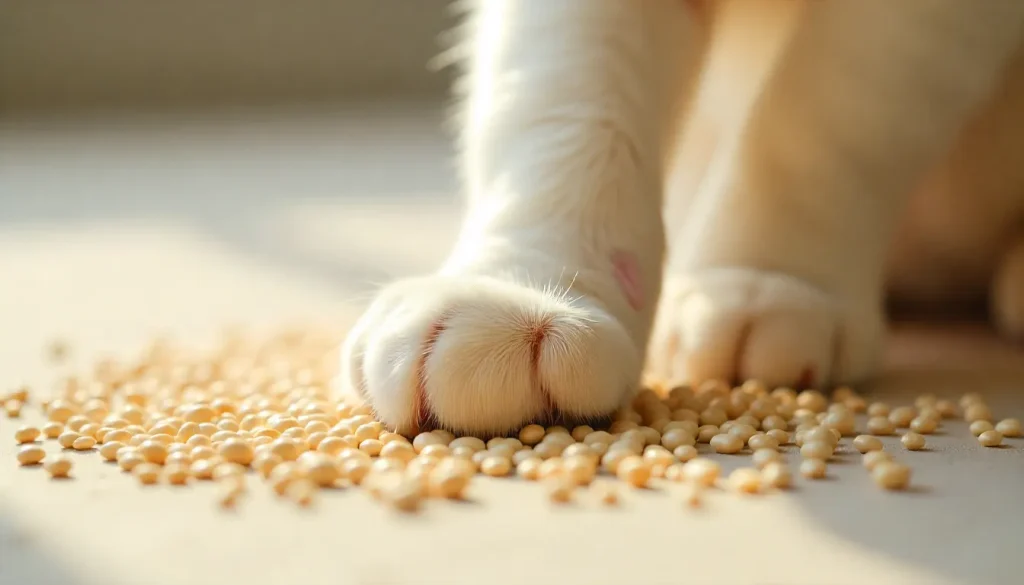
Grass seed litter represents a breakthrough for declawed cat comfort. Products like Frisco Natural Lightly Scented Clumping Grass Cat Litter feature exceptionally small particles with a naturally soft texture that mimics outdoor grass.
Why it works so well:
- Ultra-fine particles prevent painful trapping between toes
- Soft texture reduces pressure on sensitive paw pads
- Natural clumping ability simplifies cleanup
- Excellent odor absorption rivals traditional clay
- Lightweight for easier litter box maintenance
The grass composition offers a gentle surface that most declawed cats instinctively accept. Many pet parents report their cats immediately adapted to grass litter after rejecting every other option.
Fine-Particle Clay Litter: The Sensitive Paw Alternative
If you prefer sticking with clay-based options, specialized formulations designed for sensitive paws provide an excellent middle ground. Dr. Elsey’s Paw Sensitive Clumping Clay Cat Litter exemplifies this category.
Key advantages:
- Significantly smaller granules than standard clay
- Softer texture reduces paw pressure
- Maintains familiar clay litter benefits
- Strong clumping for easy scooping
- 99% dust-free for respiratory health
This option works particularly well for cats who used clay litter before their declawing procedure, offering familiarity with enhanced comfort.
Other Gentle Litter Options Worth Considering
Beyond grass and fine-particle clay, several alternative materials deserve your attention:
Paper-Based Litter Most veterinarians recommend paper litter for newly declawed cats because of its soft texture, zero-dust and non-clumping properties. While non-clumping varieties require more frequent changes, the exceptional softness makes them ideal during the recovery period immediately following surgery.
Natural Plant-Based Litters Materials like corn, wheat, and wood offer soft textures with natural odor control. However, wait until your cat’s surgical wounds have completely healed before introducing these options, as some materials can cause irritation during the initial recovery phase.
What to Avoid Steer clear of pelleted litters, crystal litters, or any options with large, hard particles. These create uneven walking surfaces and can lodge between toes, causing exactly the discomfort you’re trying to prevent.

Solutions When Your Declawed Cat Refuses the Litter Box
Despite your best efforts, some declawed cats continue avoiding their litter box. Before you feel frustrated, remember this behavior stems from pain or fear—not stubbornness.
Step One: Never Punish
Yelling, hitting, or using spray bottles will only deepen your cat’s fear and worsen the problem. Punishment teaches cats to fear you, not to use the litter box correctly.
Step Two: Embrace Positive Reinforcement
Transform the litter box into a positive space through strategic rewards:
- Place high-value treats near (not in) the litter box
- Offer enthusiastic praise when your cat uses it correctly
- Schedule favorite play sessions immediately after successful bathroom visits
- Use gentle petting as a reward if your cat enjoys physical affection
Consistency matters more than intensity with positive reinforcement. Small rewards delivered every single time work better than occasional large rewards.
Step Three: Try a Litter Attractant
Specialized products like Dr. Elsey’s Precious Cat Ultra Litter Attractant contain herbal blends that naturally draw cats to the litter box. Simply sprinkle the attractant over your chosen litter according to package directions.

Many cat parents report dramatic improvements within 48-72 hours of introducing an attractant, especially when combined with a gentler litter type.
Step Four: Address Pain Management
Chronic discomfort often underlies persistent litter box avoidance. Schedule a veterinary consultation to discuss pain management options specific to declawed cats.
Your veterinarian might recommend:
- Short-term pain medications during flare-ups
- Joint supplements like Nutramax Cosequin or VetriScience GlycoFlex to support altered walking mechanics
- Anti-inflammatory medications for chronic inflammation
- Physical therapy techniques to improve paw pad health
Many declawed cats develop altered gaits that stress their joints over time, making supplements valuable for long-term comfort.
Essential Litter Box Setup Tips for Declawed Cats
Beyond choosing the right litter, optimize your entire litter box setup:

Location Strategy
- Place at least one box on every floor of your home
- Keep boxes away from noisy appliances that might startle your cat
- Ensure privacy without complete isolation
- Never position boxes near food and water dishes
Accessibility Matters Consider a low-entry litter box or create a custom entry point. Jumping into high-sided boxes can strain sensitive paws and discourage use.
Cleanliness is Non-Negotiable Scoop thoroughly at least once daily—twice for multi-cat households. Deep clean boxes every two weeks using mild, unscented soap. Dirty litter boxes amplify discomfort for already-sensitive paws.
Consider Litter Depth Many declawed cats prefer shallower litter (1-2 inches) rather than the standard 3-4 inches. Less depth means less digging and reduced paw pressure.
When Litter Boxes Aren’t Working: The Last Resort Option
After exhausting all other solutions—changed litter types, added attractants, addressed pain, and optimized placement—some cats simply cannot overcome their litter box aversion.
In these rare cases, washable absorbent pads like Pet Parents Pawtect Pads offer an alternative elimination surface. These reusable pads provide a soft, flat surface that many litter-averse cats will accept.
Place pads in your cat’s preferred elimination spots (yes, even if that’s currently your carpet). Once they’re using pads consistently, you can gradually move the pads closer to an ideal location.
While not the perfect solution, pads prevent the frustration and mess of continued inappropriate elimination while you work with your veterinarian on underlying pain issues.
Creating Long-Term Success for Your Declawed Cat
The journey to litter box success with a declawed cat requires patience, but the rewards are absolutely worth the effort. Start by selecting either grass seed litter or fine-particle clay litter designed for sensitive paws. These two options provide the best combination of comfort and functionality.
Monitor your cat’s response carefully during the first week after switching litters. You’re looking for increased litter box usage, reduced signs of discomfort (like favoring paws or vocalizing during elimination), and most importantly, no accidents outside the box.
Remember that some declawed cats need time to overcome psychological associations with pain. Even after physical healing, their brain might remember previous discomfort. Stay consistent with your chosen litter, maintain impeccable box cleanliness, and use positive reinforcement generously.
If problems persist beyond two weeks despite trying multiple litter types and optimizing your setup, schedule a veterinary appointment. Underlying medical issues sometimes compound litter box challenges, and professional guidance ensures you’re not missing anything important.
Your declawed cat deserves a comfortable, stress-free bathroom experience. With the right litter choice and thoughtful setup, you can provide exactly that—creating a happier home for both of you.
